

Ordering the wrong rubber tracks can delay your job, increase downtime, and cost money in return shipping.
The good news? Measuring rubber tracks is straightforward — if you know what to look for.
Whether you’re replacing CTL (Compact Track Loader) tracks or excavator tracks, this step-by-step guide will help you identify the correct size quickly and accurately.
The 3 Numbers You Need
Rubber track sizing is always written in this format:
Width × Pitch × Number of Links
For example:
400 × 86 × 52
Step 1: Measure the Track Width
This is the easiest number to find.
- Measure straight across the track from edge to edge.
- Record the measurement in millimetres.
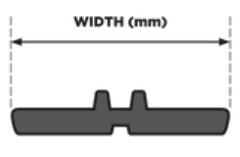
Make sure you’re measuring the rubber itself — not including guide lugs underneath.
Step 2: Measure the Pitch
Pitch is the distance between the centre of one internal drive lug to the centre of the next.
This measurement must be exact.
Use a tape measure and measure from the centre of one lug to the centre of the next lug.
If you’re unsure, measure across multiple lugs (for example 5) and divide by the number of spaces — this reduces measurement error.
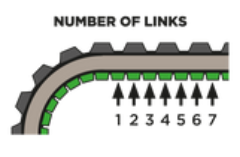
Step 3: Count the Number of Links
This is simply the total number of internal drive lugs around the entire track.
- Count every lug once.
- Make sure you complete a full loop.
- Don’t guess — miscounting by one link means the track won’t fit.
Example
If your measurements are:
- Width: 400mm
- Pitch: 86mm
- Links: 52
Your track size would be:
400 × 86 × 52
That’s the exact format you’ll need when ordering.

Where to Find the Track Size
In most cases, the size is moulded into the inside of the track.
Look along the inner rubber surface for numbers in the format:
XXX × XX × XX
However, if the track is worn or damaged, the moulded number may not be readable — which is why knowing how to measure manually is important.

Can I Order Using My Machine Model?
Yes — in most cases you can order rubber tracks by machine make and model.
However, some machines can run multiple track sizes depending on:
- Undercarriage configuration
- Year of manufacture
- Optional narrow or wide track setups
If you’re unsure, measuring directly is always the safest option.
Common Measuring Mistakes
Avoid these errors:
- Measuring width in inches instead of millimetres
- Guessing pitch instead of measuring precisely
- Miscounting links
- Ordering based on another machine “that looks similar”
Rubber tracks must match exactly. Even one link difference will prevent proper fitment.
Why Correct Sizing Matters
Incorrect track size can cause:
- De-tracking
- Premature wear
- Sprocket damage
- Excess tension issues
Getting the measurements right protects your undercarriage and keeps your machine running efficiently.
Need Help Identifying Your Track Size?
If you’re unsure about your measurements, our team at Rubber Track Canada can help confirm the correct size for your machine.
Simply provide:
- Machine make and model
- Width measurement
- Pitch measurement
- Number of links
We’ll make sure you get the right fit the first time.
👉 Contact us today for expert assistance.